



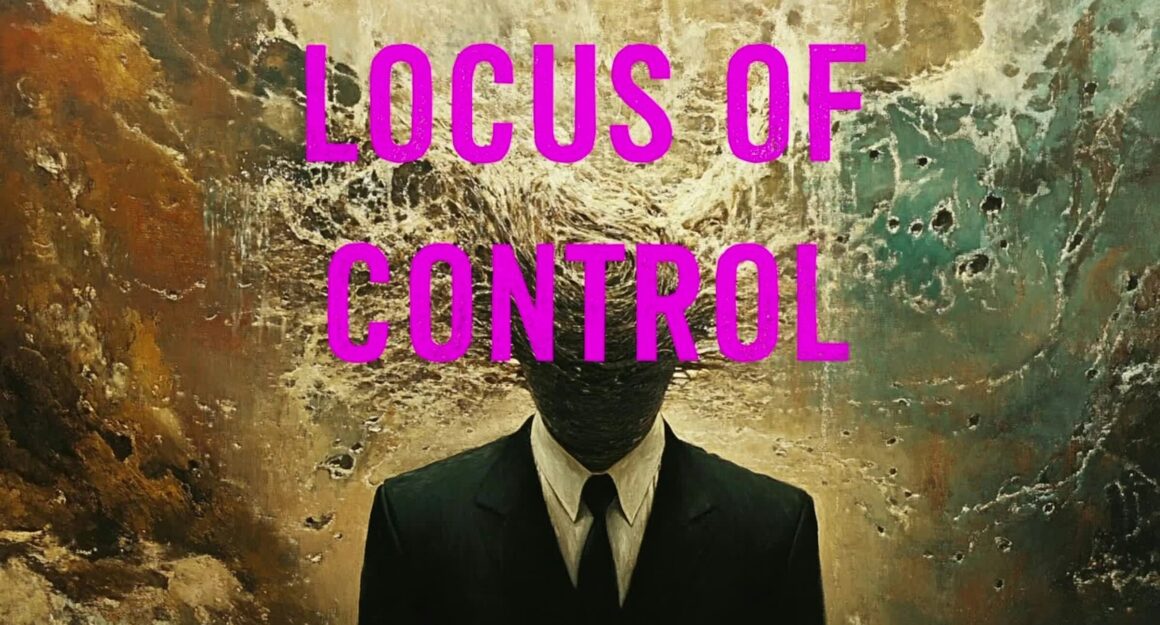
There is a single psychological turning point that separates people who succeed, lead, and stay resilient from those who remain stuck, frustrated, and reactive.
It comes down to a fundamental concept identified by psychologist Julian Rotter: Locus of Control.
Your locus of control determines where you place agency in your life. Do you believe that your life, health, income, and relationships are governed by your own decisions and work ethic? Or do you believe you are at the mercy of luck, fate, the economy, or the actions of others?
Understanding this distinction isn’t just an academic exercise—it is the foundational architecture of true self-leadership.
External vs. Internal: Where Do You Plant Your Flag?
Think of your mindset as planting a flag on one of two sides:
1. External Locus of Control
People with an external locus of control believe their thoughts, actions, and outcomes are controlled by forces outside themselves. They attribute their circumstances to luck, fate, their upbringing, government policies, or cosmic chance.
When things go wrong, they play the victim. When things go right, they call it luck.
You see this play out across society—from the booming growth of online gambling to people spending hard-earned money on lottery tickets hoping for an external savior. By relinquishing agency, they trade personal power for the illusion that life is just a roll of the dice.
2. Internal Locus of Control
People with an internal locus of control plant their flag firmly on self-ownership. They believe that while they cannot control every external event, their thoughts, work ethic, habits, and responses are 100% within their command.
When you adopt an internal locus of control, you stop leaving your destiny to chance. You realize that your trajectory is a direct reflection of your choices.
To explore how psychological frameworks and self-determination shape human behavior, learn more about Julian Rotter’s Locus of Control Theory on Simply Psychology.
The Radical Freedom of 100% Responsibility
Taking complete responsibility for your outcomes can feel uncomfortable at first. In fact, most people have an immediate, physical resistance to the idea of owning 100% of their results.
Yet, taking ownership is where true freedom lives.
Consider a major personal setback, like a painful divorce or a business deal that went sideways. The easy, automatic path is to point fingers:
- “They betrayed me.”
- “The market collapsed.”
- “My business partner was dishonest.”
While those external factors may be true, blaming them gives away your power. You remain trapped in a victim mindset.
The moment you pause and ask, “What was my role in this? Where did I ignore red flags? What could I have done differently?” everything shifts.
When you trace bad outcomes back to your own decisions—overlooking details because of urgency, ignoring boundaries, or failing to communicate—you gain salvation. You can’t change other people, but you can change yourself. And once you take responsibility, you hold the blueprint to ensure it never happens again.
Why You Cannot Lead Others Without Self-Ownership
If you do not maintain an internal locus of control in your personal life, you will never be an effective leader.
Leadership requires navigating chaos, executing strategy, and holding high standards. If you leave your team’s success or your organization’s performance to luck, your results will be wildly inconsistent.
High-caliber leaders build unshakeable systems based on personal accountability:
- They Honor Standards: They set firm boundaries and refuse to compromise core principles for short-term gain.
- They Trace Failures Back to the Source: When a project fails, they look in the mirror before looking out the window.
- They Eliminate Excuses: They focus strictly on execution, leverage, and continuous learning rather than complaining about external conditions.
When you own everything, you gain the clarity required to navigate any challenge.
For a deeper look at how shifting away from external excuses and victim mindsets builds long-term resilience, explore Lisa Rinna on Persistence, Positivity, and The Power of Positive Thinking.
What You Unlock Inside the Community
Mastering an internal locus of control requires unlearning years of conditioned, reactive behavior. Inside the Syndicate X platform, members work through these core shifts together:
- Locus of Control Masterclasses: Deep-dive video lessons detailing how to incorporate extreme responsibility into your daily belief system.
- Accountability Networks: Connect with high-performing CEOs, entrepreneurs, and leaders who refuse to accept excuses or external blame.
- Actionable Systems: Practical frameworks for evaluating business deals, personal relationships, and strategic execution.
To actively practice these principles, track your growth, and document your personal architecture, grab the I AM LEADER Workbook for Leadership Mastery.
Frequently Asked Questions (FAQs)
What is the difference between internal and external locus of control?
An internal locus of control is the belief that you are responsible for your own outcomes through your choices, effort, and behavior. An external locus of control attributes success or failure to outside forces like luck, fate, or other people.
Can someone shift from an external to an internal locus of control?
Yes. Locus of control is a choice and a mental framework that can be developed over time by consciously catching yourself when you make excuses and choosing to take responsibility for your reactions and results.
Does having an internal locus of control mean blaming yourself for everything?
No. It isn’t about self-punishment; it’s about agency. Recognizing your role in an outcome gives you the leverage to learn, grow, and make better choices in the future.
Where can I access the full video course on Locus of Control?
The complete video masterclasses, study materials, and community discussion boards are available inside the private Syndicate X Community Platform.
Where Will You Plant Your Flag?
At the end of the day, where you attribute responsibility dictates where you end up in life.
You can continue to blame circumstances, the economy, or other people—or you can plant your flag firmly on the internal side and take command of your destiny.
Take an honest inventory of your life right now: Where are you relinquishing control, and where do you need to start taking 100% responsibility?
Claim your copy of the I AM Leader Bookset and join Syndicate X to start mastering the architecture of true leadership.