



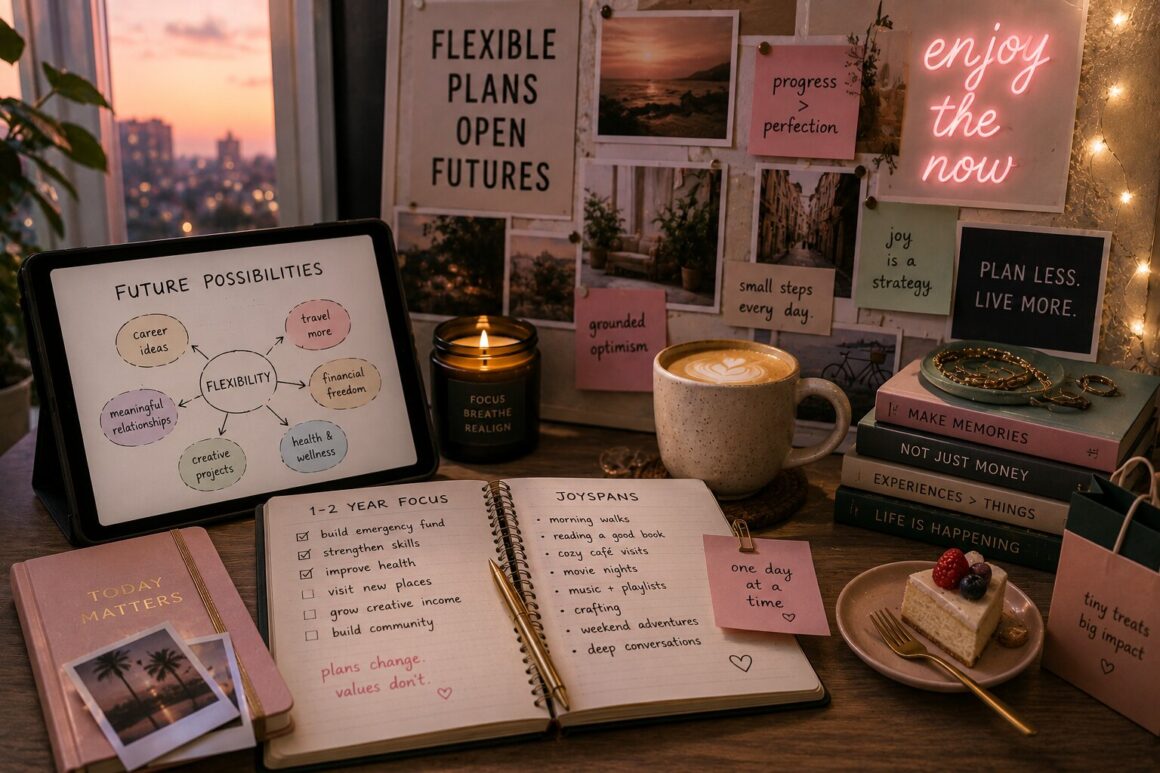
For decades, success was often measured by long-term planning. People were encouraged to map out where they wanted to be in five years, set ambitious milestones, and build detailed roadmaps for the future.
In 2026, that mindset is rapidly changing.
Across Millennials and Gen Z, the traditional five-year plan is quietly disappearing. Instead of mapping out the next half-decade, many young adults are focusing on shorter, more flexible goals that feel realistic in an increasingly unpredictable world.
This isn’t necessarily pessimism. In fact, many experts describe it as a form of “grounded optimism”—the belief that meaningful progress is possible even when long-term certainty feels harder to predict.
Below, we explore why younger generations are stepping away from five-year plans and how this shift is transforming everyday lifestyle choices.
Why Have Millennials and Gen Z Stopped Making Five-Year Plans?
The biggest reason is unpredictability.
Over the past decade, economic disruptions, rapid technological change, shifting job markets, housing challenges, and global events have made long-term forecasting feel increasingly unreliable.
Many young adults have experienced situations where carefully constructed plans became irrelevant almost overnight. As a result, planning too far ahead can feel unrealistic or even stressful.
Instead, people are focusing on shorter timeframes where goals feel achievable and adaptable. A one-year or two-year horizon often feels more practical than trying to predict life half a decade into the future.
What Is Grounded Optimism?
Grounded optimism is the belief that positive outcomes are possible without assuming everything will go exactly as planned.
Unlike traditional optimism, which may focus heavily on long-term aspirations, grounded optimism emphasizes flexibility and responsiveness.
People adopting this mindset still set goals, but they leave room for change. Rather than building rigid life plans, they create frameworks that can evolve as circumstances shift. This shift in how success is understood echoes ideas explored in How Laura Marano Used Outliers to Build Her Original Sound, where long-term growth is shaped more by adaptability and persistence than fixed planning.
This approach allows individuals to maintain hope while acknowledging uncertainty.
Why Are Millennials and Gen Z Leading This Trend?
Millennials and Gen Z have grown up during periods of significant economic, technological, and cultural transformation.
Many have witnessed housing market volatility, changing career paths, rapid technological disruption, and major shifts in social norms. These experiences have shaped how they think about the future.
According to Pew Research Center, younger adults continue to adapt their digital habits in response to evolving social and economic realities, influencing how they think about goals and personal success.
Rather than viewing uncertainty as temporary, many younger adults now see it as a normal part of life.
As a result, adaptability has become more valuable than predictability.
Instead of asking, “Where will I be in five years?” people increasingly ask, “What can I realistically improve within the next year or two?”
What Is Treatonomics?
One of the most visible outcomes of this mindset is the rise of “Treatonomics.”
Treatonomics describes the tendency to spend on small, meaningful luxuries even when larger financial goals feel difficult to achieve.
Rather than saving exclusively for distant milestones, people are investing in experiences and purchases that bring immediate satisfaction.
This can include:
- Specialty coffee and premium snacks
- Designer stationery and desk accessories
- Boutique candles and home décor
- Small wellness purchases
- Unique hobby-related products
These purchases are often viewed as manageable ways to improve daily life without requiring major financial commitments.
Why Are Small Luxuries Becoming So Popular?
Small luxuries offer a sense of control.
When larger life goals such as homeownership, career certainty, or long-term financial stability feel increasingly complex, smaller indulgences become emotionally rewarding.
A high-quality notebook, an artisanal dessert, or a beautifully designed workspace accessory may seem minor, but these purchases can create moments of enjoyment and personalization.
They provide immediate value in a way that long-term goals sometimes cannot.
This explains why many consumers are prioritizing everyday upgrades rather than waiting for future milestones.
What Are Joyspans?
Another emerging concept is the idea of “Joyspans.”
A Joyspan refers to a short-term activity, habit, or experience designed to provide immediate happiness and emotional energy.
Rather than focusing solely on distant self-improvement goals, people are incorporating smaller moments of enjoyment into their routines.
Examples include:
- Reading a chapter of a favorite book
- Trying a new café
- Taking a creative workshop
- Exploring a local event
- Starting a short-term hobby project
These activities prioritize present-day fulfillment without requiring long-term commitment.
How Is This Affecting Health and Wellness?
The shift toward shorter planning horizons is influencing wellness culture as well.
Traditional fitness messaging often emphasizes long-term transformations that require months or years of dedication. Many consumers are now gravitating toward wellness activities that provide immediate benefits.
Walking clubs, recreational sports, yoga sessions, creative movement classes, and mindfulness practices are gaining popularity because people can feel positive effects right away.
This doesn’t mean long-term health goals are disappearing. Rather, people increasingly want wellness routines that deliver both immediate enjoyment and future benefits.
Is Social Media Contributing to This Shift?
Yes, but not always in the way people expect.
Social media accelerates trend cycles and constantly exposes users to new ideas, opportunities, and lifestyle choices. This can make long-term planning feel more difficult because the cultural landscape changes so quickly.
At the same time, social platforms also encourage people to document and celebrate everyday moments.
As a result, many users are becoming more focused on enhancing daily life rather than waiting for major future milestones. This growing interest in emotional reflection and memory echoes themes explored in Hilarie Burton Found Deep Nostalgia Through Dandelion Wine, where literature becomes a way of reconnecting with meaning, memory, and slower emotional pacing.
According to Pew Research Center, younger adults continue to adapt their digital habits in response to evolving social and economic realities, influencing how they think about goals and personal success.
Does This Mean People Have Given Up on the Future?
Not at all.
The move away from five-year plans is not necessarily a rejection of ambition. Instead, it reflects a different approach to uncertainty.
People still want meaningful careers, financial stability, personal growth, and fulfilling relationships. They are simply becoming more flexible about how those outcomes are achieved.
Grounded optimism allows individuals to pursue progress without feeling trapped by rigid expectations.
This mindset often reduces the pressure associated with trying to predict an increasingly unpredictable future.
Could This Become the New Normal?
There is strong evidence that shorter planning horizons may remain common for years to come.
As technology, work, and culture continue evolving rapidly, adaptability is becoming one of the most valuable life skills.
Rather than constructing fixed five-year roadmaps, many people are building lives designed to evolve alongside changing circumstances.
According to McKinsey & Company, consumer behavior increasingly reflects a desire for flexibility, personalization, and experiences that deliver immediate value alongside long-term benefits.
This broader shift suggests that grounded optimism may become a defining mindset of the decade.
FAQ Section
What is grounded optimism?
Grounded optimism is a mindset that balances hope and ambition with realistic expectations and flexibility.
What is Treatonomics?
Treatonomics refers to spending on small luxury items or experiences that improve daily life and provide immediate satisfaction.
What is a Joyspan?
A Joyspan is a short-term activity or experience that delivers happiness, enjoyment, or emotional renewal in the present moment.
Are Millennials and Gen Z giving up on long-term goals?
No. Many still have long-term ambitions but prefer flexible planning strategies that can adapt to changing circumstances.
Conclusion
The decline of the traditional five-year plan reflects a broader cultural shift toward adaptability, intentional living, and realistic optimism. Faced with rapid change and economic uncertainty, Millennials and Gen Z are focusing less on distant predictions and more on creating meaningful lives in the present.
From Treatonomics and Joyspans to flexible goal-setting and grounded optimism, the message is clear: in 2026, success is becoming less about perfectly planning the future and more about navigating it with confidence, resilience, and purpose.